Marshall Ayub Reaches 10,000 First-Class Runs—but Says Recognition Remains Elusive
Marshall Ayub achieves 10,000 first-class runs, becoming only the fourth Bangladeshi to do so, yet highlights the persistent struggle for recognition among domestic cricketers.
Cricraze Reporter
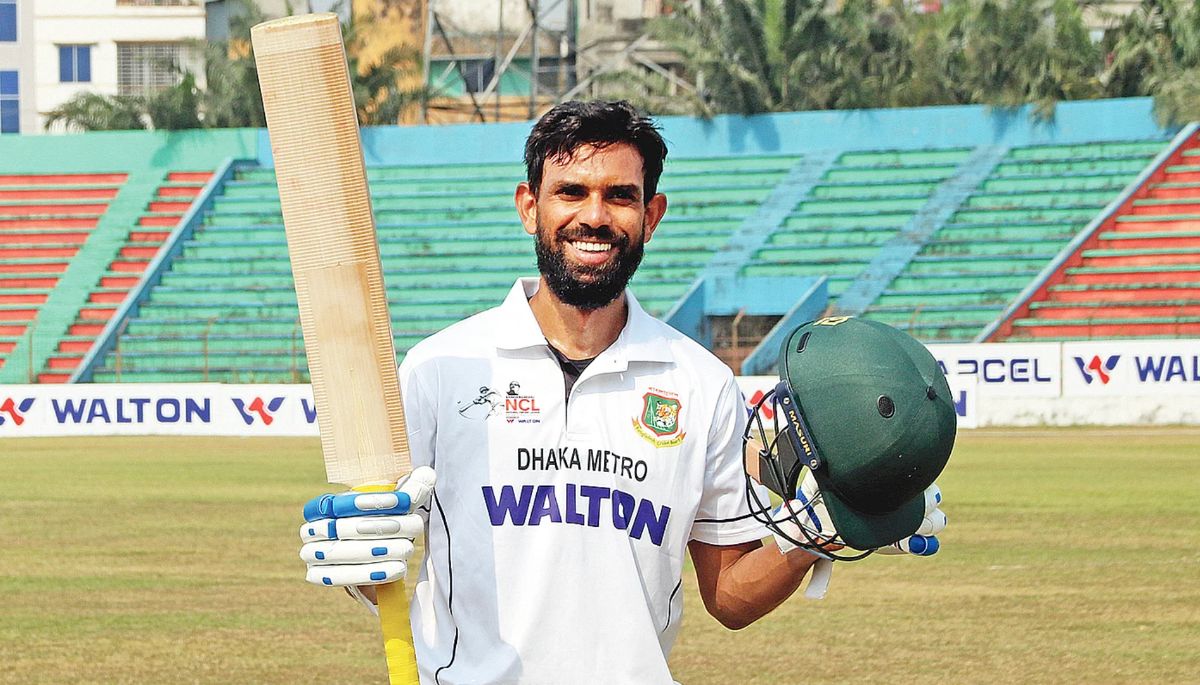
Marshall Ayub has spent two decades as one of Bangladesh’s most consistent performers in first-class cricket. This week, the 36-year-old batter crossed the 10,000-run mark—becoming only the fourth Bangladeshi to do so. Yet in a candid interview, he said the milestone also underscored a deeper frustration: that domestic performers continue to be overlooked, underpaid, and undervalued.
Ayub made his first-class debut in December 2005, as a teenager still attached to the Under-17 setup. “We didn’t have so many cricketers then,” he recalled. “Some of us were pushed into the system early. It feels strange to think it has been 20 years.”
Though his fitness allowed him to stretch his career, Ayub acknowledged that the grind has required a different kind of resilience. “In our country, first-class cricketers don’t get much respect. Even Test players struggle for recognition,” he said. “I wanted to achieve something meaningful here—something that could inspire the next generation.”
Despite 28 first-class centuries and seasons of sustained scoring, his international career never took off. Ayub played just three Tests in 2013, all at No. 3—an unfamiliar position for a player accustomed to the middle order. “International cricket at No. 3 is tough. You have to handle everything—fast starts, slow spells, long spells. It’s called ‘Test’ cricket for a reason,” he said. “I adapted as a middle-order batter. But I was asked to face the new ball.”
He still believes he was given too little time. “If you ask anyone from that period, they’ll say I didn’t get enough opportunities,” Ayub said. “I scored more than a thousand runs in back-to-back seasons. Even after I was dropped, I kept scoring in the National League and BCL. But I wasn’t called again. Maybe the selectors thought I wasn’t good enough.”
The disappointment lingers most in how domestic achievements are treated. Ayub was blunt: “Yesterday I completed 10,000 runs, and the BCB Facebook page didn’t post our photo. They asked me for photos later—and only then did they put something up. Think about it: where do we stand? Young players see that if you don’t play for the national team, you’re not valued.”
Ayub also pointed to structural gaps. First-class cricket, he said, still struggles with inconsistent preparation facilities, uneven pitches, and the absence of year-round access to training spaces. “Those not in HP or the A team have it tough. Even in Dhaka, practice spots are limited. Each division should have a field where players can train all year. If you want domestic cricket to reflect international standards, the wickets must improve.”
He noted that players now compete in fewer long-format matches than before. “Earlier we played 10 matches in two rounds of NCL; now it’s seven. BCL hasn’t happened for two years. Without volume, how will players grow?”
As for retirement, Ayub is torn. His family, especially his young children, still enjoy watching him play. But the economics are stark. “A four-day match pays Tk 70,000. A T20 pays Tk 50,000. The difference is too small. Still, I play first-class cricket because I love red-ball cricket. But to make it sustainable, fees need to go up by at least 30 to 40 percent.”
For now, Ayub remains one of the quiet stalwarts of Bangladesh cricket—still scoring, still fighting, still waiting for the system to value what he has spent a lifetime building.